Understanding Zakat
Zakat is the obligatory annual charity and one of the five pillars of Islam, requiring eligible Muslims to give a portion of their income to support those in need. We are privileged to have the verification to manage the collection and distribution of Zakat, providing humanitarian aid and development assistance to vulnerable communities worldwide.
100.00$

Overview
Why Zakat Matters?
Zakat is not merely an act of generosity; it is a sacred duty and a right for the poor. Giving Zakat:

Fulfills your religious obligation

Purifies your wealth and heart

Supports the Needy

Reduces Poverty and Inequality

Strengthens the bonds of your community

Increases Blessings and Barakah
“Take from their wealth a charity by which you purify them and cause them to increase”
(Surah At-Tawbah, 9:103)


Zakat Calculator
Calculate Your Zakat
Nisab threshold as of November 12, 2025 – 20:30 Using value of gold (85 grams) - Approximately $11,442.45
Assets & Liabilities
Deductibles
Zakat-Eligible Total
Zakat-Eligible Total = (Total Assets & Liabilities - Total Deductibles)
Your Zakat = (%2.5 x Zakat-Eligible Total)

You Are Not Zakat Eligible
Zakat-Eligible Total = (Total Assets & Liabilities - Total Deductibles)
Your Zakat = (%2.5 x Zakat-Eligible Total)
Hunger & Displacement
How Rahma Distributes Zakat
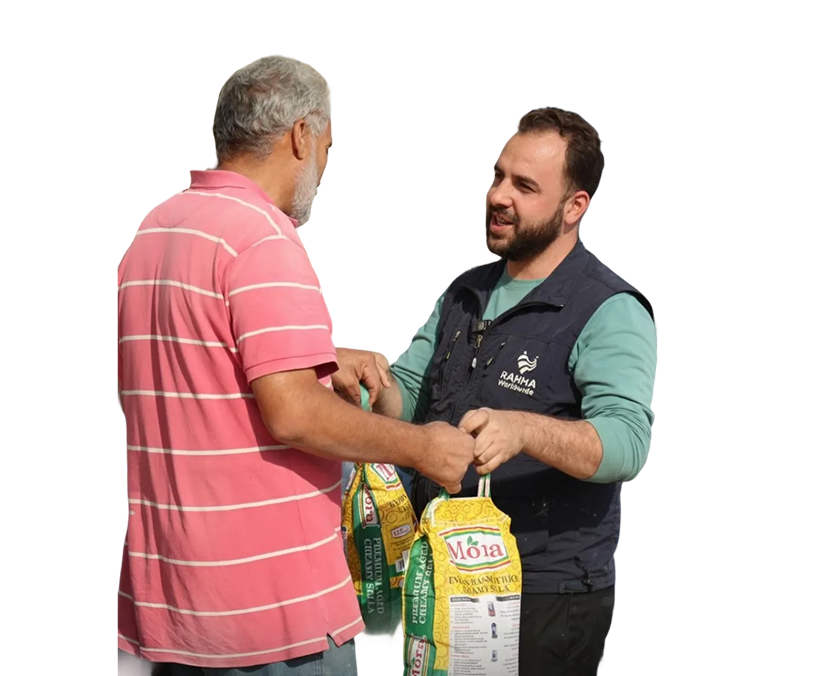
At Rahma Worldwide, every Zakat contribution is carefully distributed in full compliance with the guidelines of the Qur’an and Sunnah. Your donation goes directly to those who need it most, making a real and lasting difference in their lives.

Providing food, shelter, and medical aid to displaced and impoverished families.
Supporting orphans, widows, and the elderly.
Facilitating educational opportunities for children and adults in need.
Delivering emergency aid during crises or natural disasters.

Give Your
Zakat
 Today
Today
Give your Zakat today and make a meaningful impact. With Rahma, your Zakat is distributed responsibly to those who need it most. Donate now and be the reason someone feels hope and remembered.
Support
FAQs
What Is Zakat?
Zakat is a form of charitable giving in Islam, meaning purification and blessing. Eligible Muslims are required to give 2.5% of their money to those in need, fostering community growth and well-being.

Who Receives Zakat?
All Zakat contributions received by Rahma Worldwide are strictly distributed in
accordance with the guidelines outlined in the Quran and Sunnah. The following
categories of beneficiaries are prioritized:
- The Poor (Al-Fuqara): Individuals with minimal or no income.
- The Needy (Al-Masakin): Those who struggle to meet their basic needs.
- Those in Debt (Al-Gharimin): People burdened by overwhelming debts for lawful reasons.
- Stranded Travelers (Ibn Al-Sabil): Individuals stranded away from their homes without
resources.
- To Free Captives (Ar-Riqab): Support for efforts to liberate individuals from bondage
or modern equivalents.
- For the Cause of Allah (Fi Sabilillah): Initiatives that advance humanitarian and
spiritual causes, including community development and relief.
- Zakat Administrators: A portion of Zakat may cover reasonable administrative costs
directly related to its collection and distribution.

What Is Nisab and Hawl?
Nisab is the minimum amount of wealth a Muslim must have after covering
basic living
expenses before Zakat becomes due. It is measured in terms of 85 grams (3 ounces) of 24k
gold. The nisab in our Zakat Calculator represents the most recent gold value available
to us. Please keep in mind that this sum is subject to regular fluctuations in the gold
market.
Hawl is the obligatory holding period for Zakat-eligible wealth, which
is one full lunar year. This means that your wealth must remain over the nisab for a
full year before Zakat is due. Some types of Zakat, such as those on crops, do not
require a full year and are paid at harvest. If you need personalized guidance, we
encourage you to consult your local imam or scholar.
If My Wealth Falls Below the Nisab During the Year, Do I Still Owe Zakat?
Yes, however, please consult your local imam or chosen scholar for further information.
Who Is Required to Pay Zakat?
Every adult Muslim who meets the requirements for nisab and hawl during the year must pay Zakat. In some cases, a guardian (wali) may be obligated to pay Zakat on behalf of a minor's eligible assets. For special conditions or questions, we recommend consulting your local imam or scholar.
Do I Need To Make an Intention for My Zakat To Be Valid?
Yes. In Islam, intention is an essential component of all forms of worship, including Zakat. Your intention should be made at the time you pay your Zakat.
What Types of Wealth Are Included in the Zakat Calculation?
In general, the criteria below explain the sorts of wealth that should be counted when
calculating Zakat:
- You must own the wealth and have control over it. Outstanding debts do not need to be
factored into your computation.
- Wealth should have the possibility for growth.
- After paying for basic living expenses, your leftover wealth must meet the nisab
level.
- Personal belongings, including clothing, your primary residence, food, and personal
cars, are not subject to Zakat.
Do I Need To Pay Zakat on My Home?
You do not owe Zakat on your primary residence. However, if you possess a second property that is rented out, Zakat is calculated on the net rental revenue after deducting essential expenses.
Do I Need To Pay Zakat on My Jewelry?
Yes, Zakat applies to jewelry that is not worn frequently or is kept primarily as an investment.
Do I Need To Pay Zakat on My Stocks?
Yes. You should compute Zakat using the current market value of your stocks.
Zakat vs. Sadaqah
In the Qur'an, the phrases Zakat and Sadaqah are used equally. In reality, however, sadaqah refers to voluntary charity, whereas zakat is a required form of donating for those who meet the conditions.
Zakat vs. Zakat Al-Fitr
Zakat al-Mal (commonly known as "Zakat") is required when a person's wealth reaches the nisab and can be paid at any time of year. Zakat al-Fitr is paid by the head of the home for each family member and is due before the Eid al-Fitr prayer.
What Does It Mean That Rahma Acts as an Agent, and How Does This Allow Me To Pay Zakat Al-Fitr in Cash?
An agent helps you satisfy your Zakat al-Fitr obligation by delivering the food on your behalf. When you provide money to an agent like Rahma, they will utilize it to buy and deliver food to individuals in need. In effect, your monetary donation is considered exactly as if you had given the food directly.
Who Is Zakat Al-Fitr Paid For? (Including Children)
Zakat al-Fitr should be paid on behalf of all family members. Some scholars propose paying for unborn children after the 120th day of pregnancy, while this is not required. Most scholars agree that Zakat al-Fitr must be paid for a child at birth. We recommend that you seek specialized assistance from your local imam or scholar.
When Should I Pay My Zakat Al-Fitr?
Zakat al-Fitr should be paid before the Eid prayer or at any time throughout Ramadan. Some scholars also authorize payment before Ramadan begins. Please ask your local imam or scholar for advice on what is appropriate for your situation.
Reach Out
Be Part of Something Good
Join Us and Spread Kindness
AT THE HEART OF OUR MISSION, THERE IS YOU.
 Donate Now!


 Pay Your Zakat Now!
 Provide Help
Today
Provide Help
Today